
Traceability: What GOTS certification means
A plain guide to the Global Organic Textile Standard: what it covers, how to read its labels and documents, and how to make organic claims you can prove.
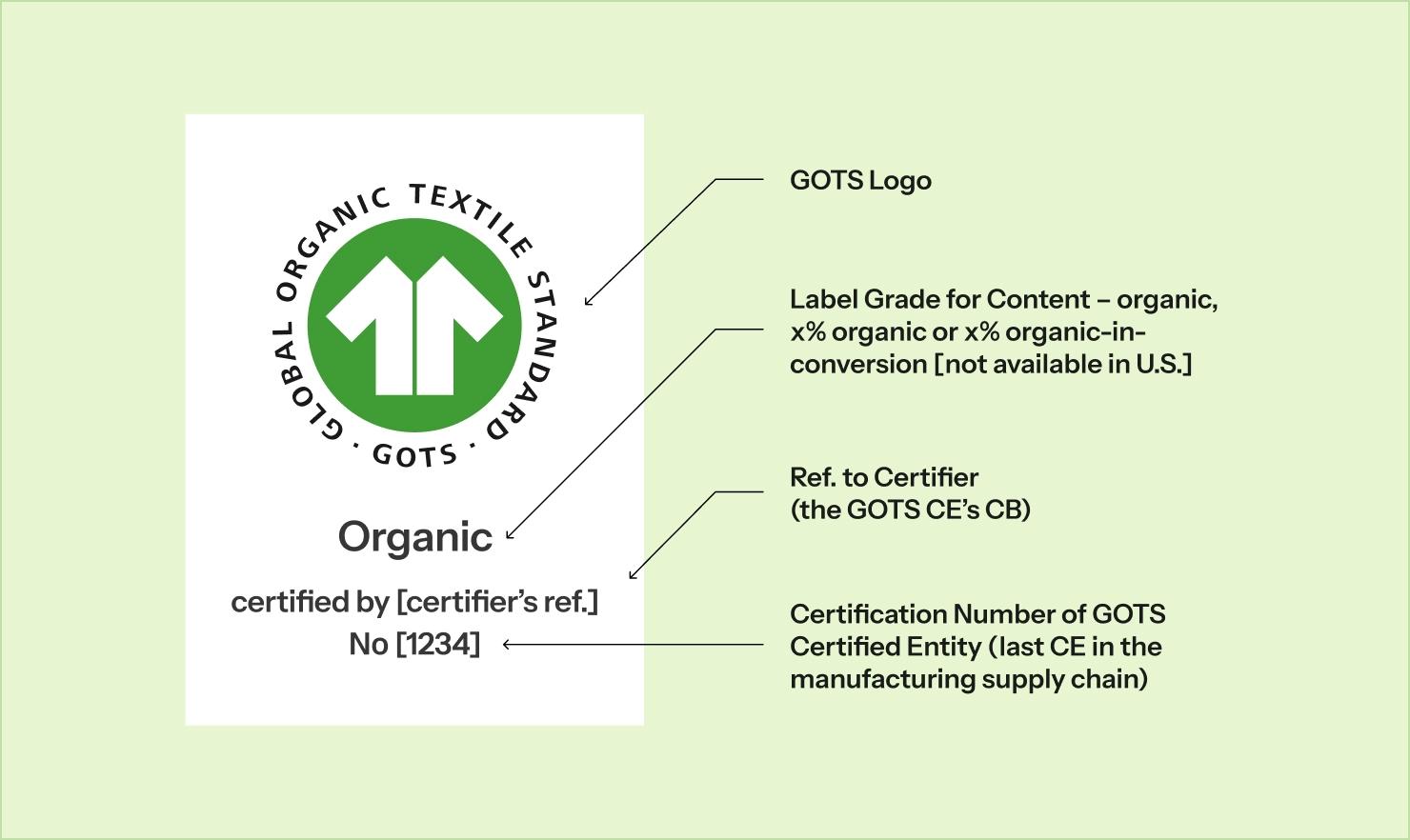
What GOTS is
GOTS is a processing standard for textiles made from organic fibres. It follows a product through processing, manufacturing, packaging, labelling, trading and distribution, and only products with at least 70% certified organic fibre qualify. Independent certifiers audit each stage of the supply chain against both environmental and social criteria.
In practice, that means more than the fibre. The standard limits the chemicals used in dyeing and finishing, requires wastewater treatment, and sets conditions for the people who work in the certified facilities.
Two label grades
A product needs at least 95% certified organic fibre to carry the “organic” grade; between 70% and 94%, the label reads “made with X% organic materials”. GOTS certifies textile products as a whole. For eligible combined products, such as a car seat, the approved label must clearly identify which textile component is certified.
The documents behind the label
- Scope certificate: shows that a company is certified, for which product categories and processes, and until when. It does not mean every product the company sells is certified.
- Transaction certificate: links a specific shipment of goods to the certified supply chain.
- Licence number: buyers can look up the number printed on each label in the GOTS database.
The current version
GOTS Version 8.0 was released in March 2026. From 1 March 2027, audits and assessments will follow the updated Version 8.1. Among its changes, the Global Fibre Registry becomes compulsory for tracing incoming certified fibre.
How to avoid greenwashing
Greenwashing is often unintentional: a true fact stretched into a broader claim. It is also now a legal matter. Since 27 September 2026, EU consumer law has barred generic claims such as “green” or “eco” unless the trader can demonstrate recognised excellent environmental performance. Sustainability labels must rest on a compliant certification scheme or come from a public authority.
Five habits keep an organic claim accurate:
- Claim the product, not the company. “Our supplier is GOTS certified” does not make an order certified. The transaction certificate does.
- Don’t confuse the fibre with the product. A fabric can contain organic cotton without being GOTS certified, if the processing was outside the certified chain.
- Be specific. State the standard, the label grade and the percentage instead of “eco-friendly” or “sustainable”.
- Use the logo only with approval. The GOTS logo belongs on certified goods, with the licence number, after the certifier has approved the label.
- Agree the documents before ordering. Confirm the standard, the composition and the certificates you will receive, so the claim is already supported when the goods arrive.