
01 · Living soil
Cover first. Cotton follows.
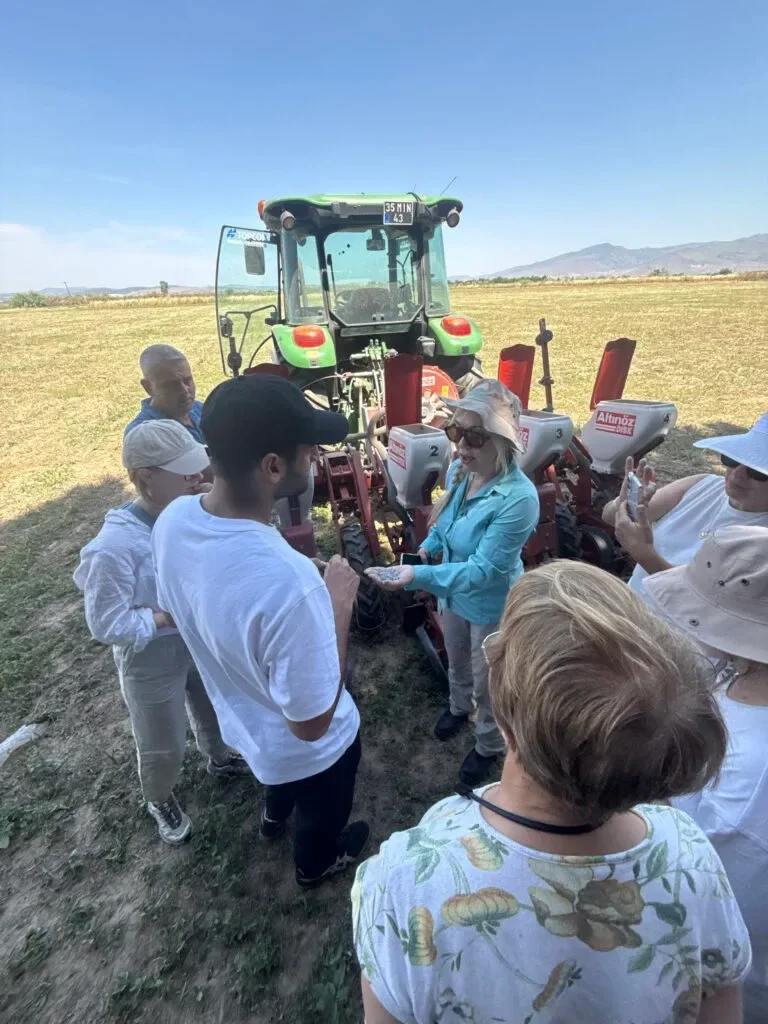
Cover crops are grown before the cotton season and left on the field as mulch. Cotton seed is then placed straight through that layer with a direct-seeding machine, without ploughing the soil.


Agricultural Projects · Regenerative Organic Cotton

Kadeks supplies organic cotton grown with regenerative practices in Türkiye’s Aegean region. We offer the fibre, as well as yarn and fabric made from the same cotton. Growers keep the soil covered, sow directly and use water carefully. The cotton can be traced back to where it was grown.
Why regenerative
Regenerative farming protects and rebuilds the soil, so the land stays productive season after season. Our regenerative cotton comes from our group’s farming project near İzmir, running since 2022.
For brands and mills, this means regenerative cotton with a known origin. Tell us your application and we will propose the right fibre, yarn or fabric, with the traceability and documentation your order needs.
In the field
01 · Living soil
Cover crops are grown before the cotton season and left on the field as mulch. Cotton seed is then placed straight through that layer with a direct-seeding machine, without ploughing the soil.

02 · Water management
Drip irrigation delivers water to the root zone. Field checks and crop sampling guide each watering decision through the season.
03 · TRACEABILITY
The cotton is ginned, spun, knitted, woven and dyed through our long-standing partner network in Türkiye, so your material can be followed from field to fabric.
Field practice
Cover crops and plant residues stay on the field as mulch between cotton seasons.
Cotton is direct-seeded through the mulch using a no-till planting machine, reducing soil disturbance.
Cotton is grown in rotation with cover crops and cereals, so the soil is not asked for the same nutrients every year.
Drip irrigation, guided by field observation and sampling.
The aim is to support a wider variety of plants, insects and soil organisms in and around the cotton field.
Soil and leaf testing, carbon-flux observation, biodiversity and farmer economics are research subjects used to assess the farming approach.
Project milestones
Tell us the application, yarn count or fabric construction, quantity and timing. Volumes follow the harvest, so early planning secures your quantity.
We review your requirements and propose suitable materials, availability and next steps.
Your order is produced through our strong partner network in Türkiye and delivered with the agreed traceability documents.
Your project
Tell us the yarn or fabric you need, the quantity and your timeline. We will reply with sourcing options, current availability and the documents we can provide.
Discuss regenerative cotton