
Regenerative organic cotton: why healthy soil comes first
How we grow regenerative organic cotton in Türkiye: the practices we apply in the field, and why soil health is at the centre of them.
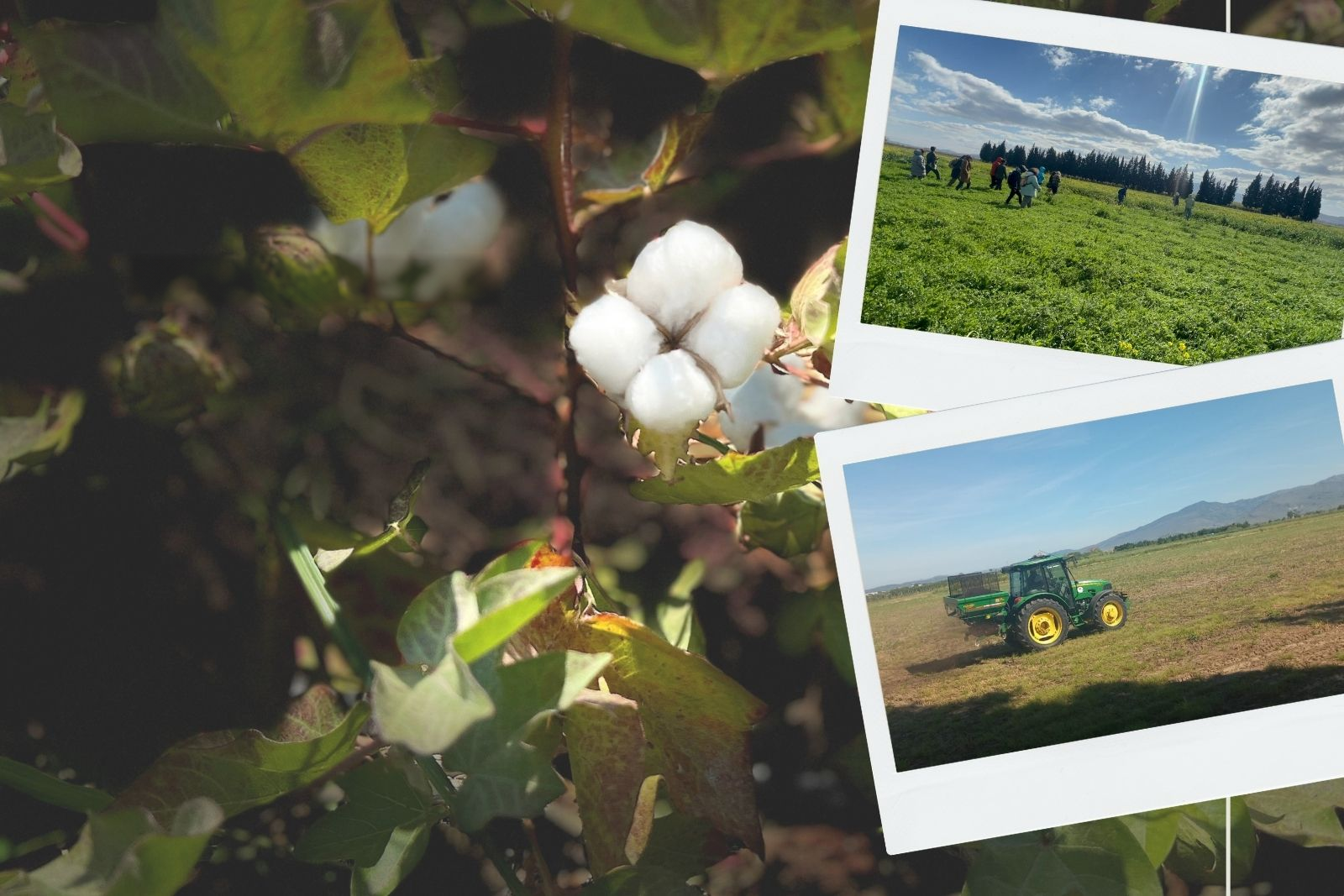
Organic farming sets out what must stay off the field: synthetic pesticides, synthetic fertilisers and genetically modified seed. Regenerative organic farming keeps those rules and adds a second aim: to leave the soil in better condition after each season than before it. This is how we grow our regenerative organic cotton in Türkiye’s Aegean region.
Why soil health matters
Healthy soil is alive. Its organic matter feeds the fungi, bacteria and earthworms that release nutrients to the plant, and it gives the soil a crumbly structure that lets roots and water move through it.
That structure matters most in a dry summer. Soil rich in organic matter absorbs rain instead of letting it run off and holds moisture for longer, so the crop copes better with heat. Covered, well-structured soil is also harder for wind and water to erode, and it stores carbon that would otherwise return to the air.
Soil that is ploughed often and left bare loses these qualities over time. Regenerative practices are designed to rebuild them.
The practices we apply in the field
- Cover crops. Between cotton seasons we grow cover crops instead of leaving the field bare. Their roots hold the soil together and feed soil life.
- A protective mulch layer. When the cover crop is finished, its residues stay on the ground. The layer shades the soil, slows evaporation and suppresses weeds without herbicides.
- Direct seeding. We place the cotton seed through that layer instead of ploughing first. Disturbing the soil as little as possible protects its structure and the life within it.
- Drip irrigation. Water is delivered to the root zone, so less is lost to evaporation and run-off.
- More than one crop. Rotating cotton with other crops, and growing companion plants alongside it, breaks pest cycles and supports biodiversity.
- Organic inputs only. GMO-free seed, and no synthetic pesticides or fertilisers.
Each practice supports the others, and the timing of each is adapted to the field and the season.
Learning from the field
Soil does not change in one season. We follow soil condition, water behaviour, biodiversity and crop performance over several years, because that is the only way to tell short-term variation from lasting improvement.
From healthier soil to your textile
The cotton grown this way goes into our yarns and fabrics. If you’d like regenerative organic cotton in your next collection, tell us what you’re making and we’ll show you where it fits.